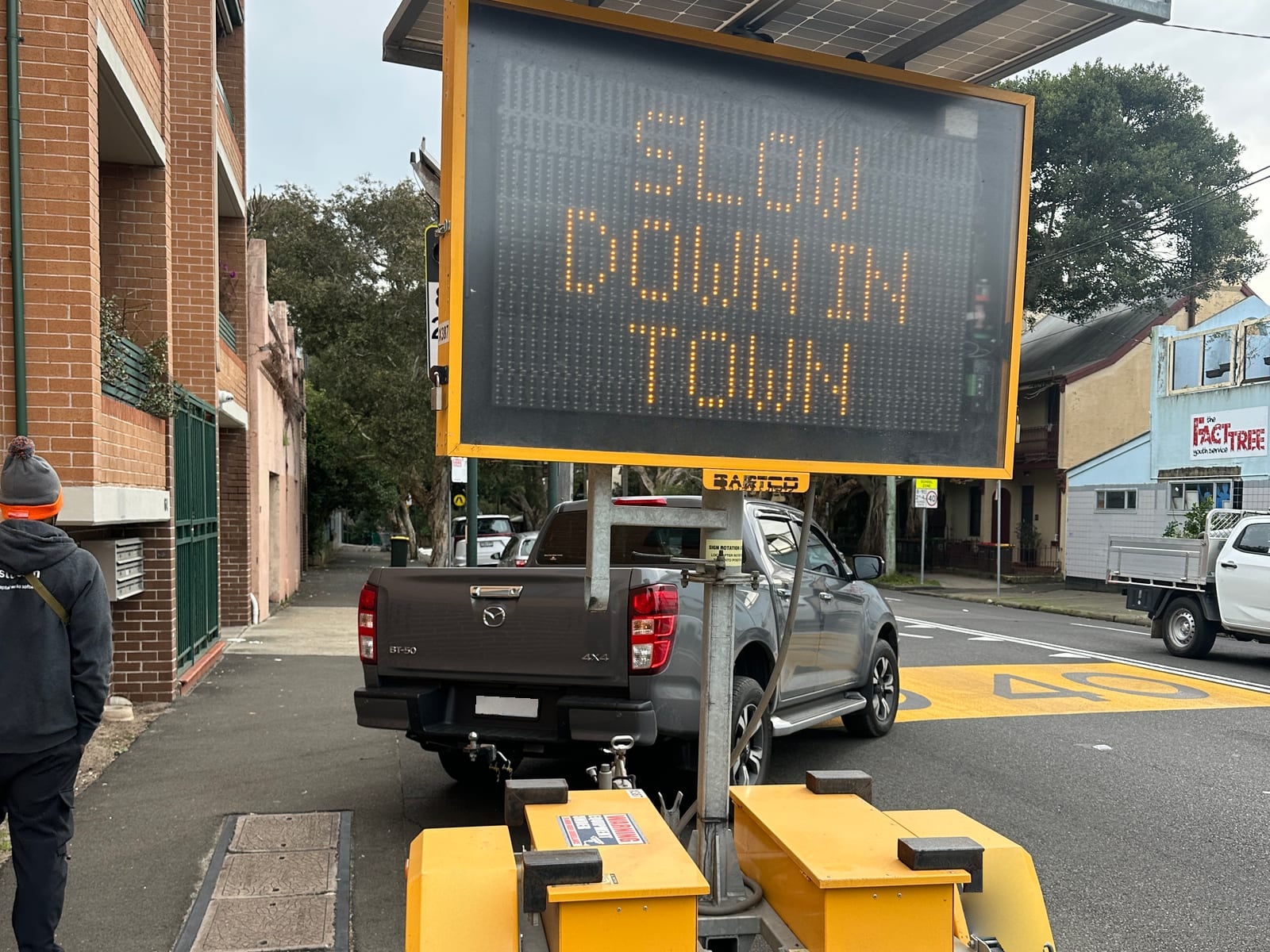
1. Leave 1.2 metres of clear footpath
Pedestrians, prams and wheelchairs have to get past without stepping onto the road. 1.2 m is the minimum we place to; more on a busy footpath. Councils measure this one first.
2. Keep well away from signalised intersections
A board near traffic lights competes with them. 300 m or more is ideal; never within sight of the signal heads. If the only spot is near lights, the message has to be short and static.
3. No flashing displays
A flashing message is a distraction, and councils treat it as one. Static frames, slow page changes, high contrast. We load the messages before delivery, so this is set before the board leaves the yard.
4. Full sun
The boards charge through solar panels. Shade from buildings or big trees means a dim screen by mid-week and a dead one by the weekend. Face the panel north and keep it out from under the canopy.
5. Council has the final say
If a council asks for a board to be moved or removed, tell us straight away and we do it, and we refund the unused hire time pro rata. Arguing with a ranger has never once ended well.
Two sizes
Size A is the compact board for footpath frontage and low-speed streets. Size C is the large display for higher-speed roads and longer viewing distances. If a council traffic plan specifies a size, we match it.