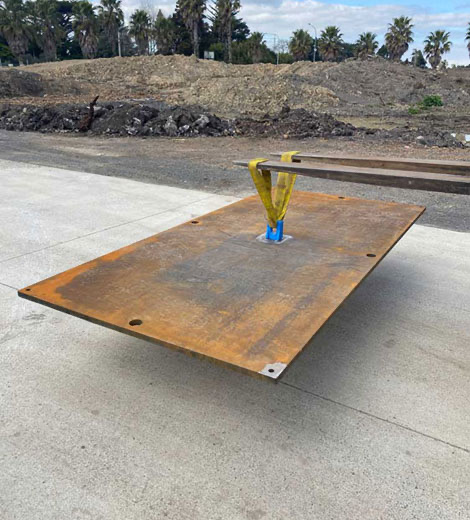
Civil programs do not order once. The trench moves down the street, the plates move with it, the depth changes and the shoring changes with the depth. This Gosford contractor ordered three times in a month, and the broker's job was to make each order feel like one phone call rather than a new negotiation.
The sequence
- 23 September to 8 October: three steel plates, 3 m x 2.4 m and 32 mm thick, about 1.8 t each, with a lifting centre piece, delivered and picked up, loaded from Huntingwood.
- 29 September to 5 October: two lower shoring boxes, 3.6 m x 2.4 m, delivered and picked up, loaded from Glendenning.
- 4 to 22 October: two more plates of the same size, with one plate added to the shoring load so the crane truck made one trip, and a credit note when a plate pick-up was not needed.
Every invoice showed the damage waiver and environmental levy as lines, and every delivery and pick-up was on the hire invoice rather than a separate transport bill. The accounts team could match each period to the program.
Why Gosford from Sydney works
The Central Coast has fewer civil yards than Western Sydney, so plates and shoring usually come up the M1. The trick is loading them together: one crane truck, one trip, one delivery fee, which is what the plate-on-the-shoring-truck move was about.