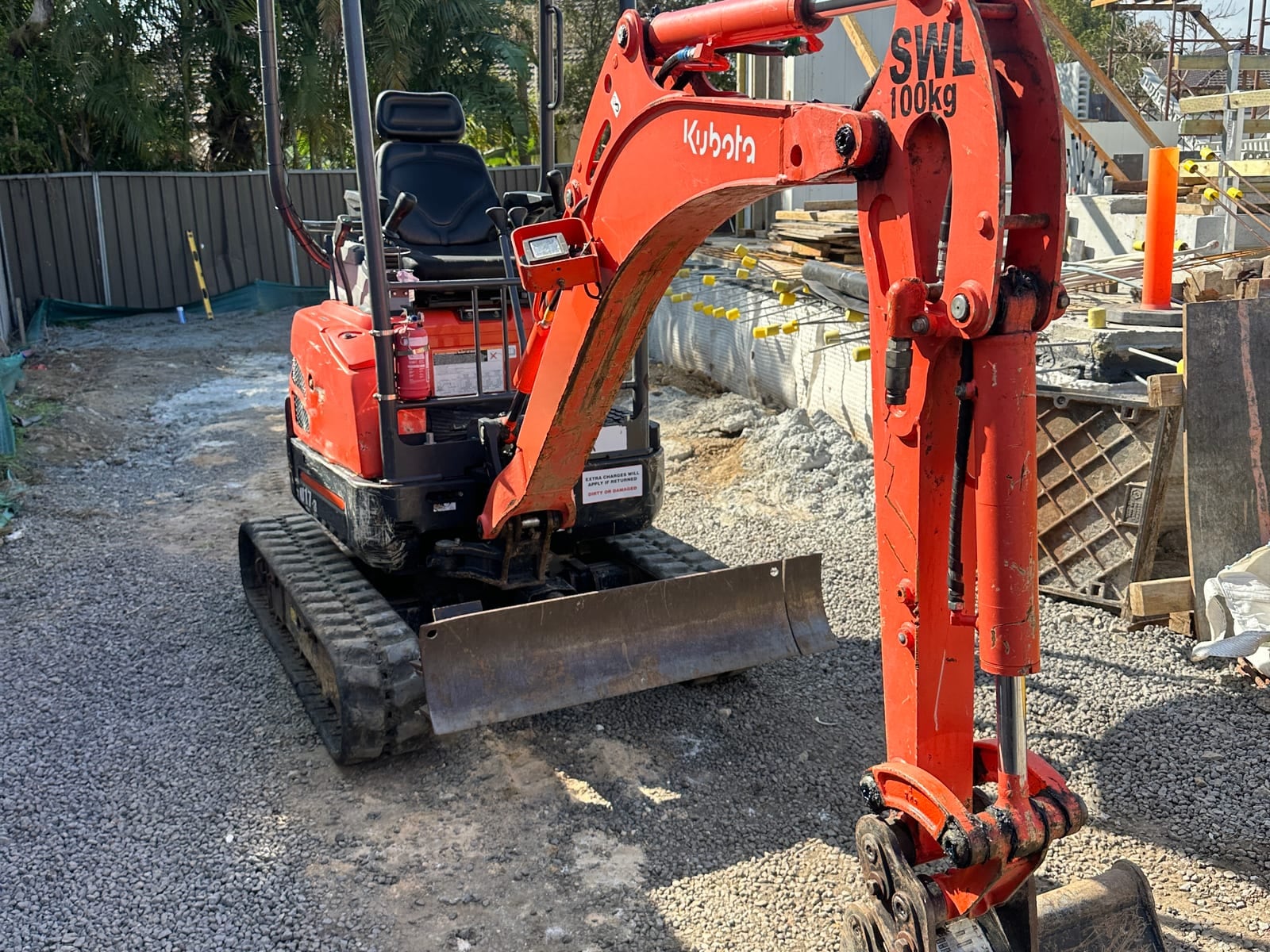
Under 800 mm: micro excavators (0.8 to 1 t)
Micro units retract their tracks to about 700 mm and squeeze through a standard side gate or a doorway, then widen again for stability. Digging depth is around 1.7 m, so they suit footings, drainage runs and post holes, not pools.
About 1 m: 1.5 to 1.8 t minis
The workhorse size. A 1.7 t machine is roughly 990 mm wide with the tracks retracted and about 1.25 m extended, digs to about 2.2 m and carries a 300 to 400 mm bucket, an auger or a breaker. Most Sydney side passages between a house and a fence take it with care.
1.5 m and over: 2.5 to 3.5 t
Driveways, pools, trenching and bulk removal. A 2.5 t unit is around 1.5 m wide and digs to about 2.8 m. It comes on a trailer and needs a driveway or a removed fence panel, not a side passage. A trench 1.5 m or deeper needs trench shoring before anyone enters it.
5 to 8 t: the suburban heavy end
Breaking out a slab, deep drainage and site cuts where a truck can get in. These travel on a float and need a hardstand to unload. Where no machine can reach the slab, a 27 kg jackhammer breaks it by hand.
13 to 15 t, zero-swing
For demolition and bulk cuts on tight blocks, a zero-swing 13 to 15 t machine keeps the counterweight inside the tracks, so it can work against a boundary fence. Same day in Western Sydney when a yard has one on the ground.
The dumper that matches
Spoil has to leave the way the machine came in. A 500 kg tracked mini dumper is about 700 mm wide and an 800 kg unit a little more; both fit the same passage and share the trailer.
What to send
- A photo of the access and the narrowest width in millimetres
- What you are digging: footings, pool, trench, drainage
- Attachments: auger, breaker, trenching or mud bucket
- The dates, and whether you need a dumper too