1. Measure the perimeter you want closed
Walk the boundary or draw it on a satellite screenshot. Measure only the line the fence will stand on, not the whole block. A side passage that already has a fence does not need panels.
2. Divide by 2.4
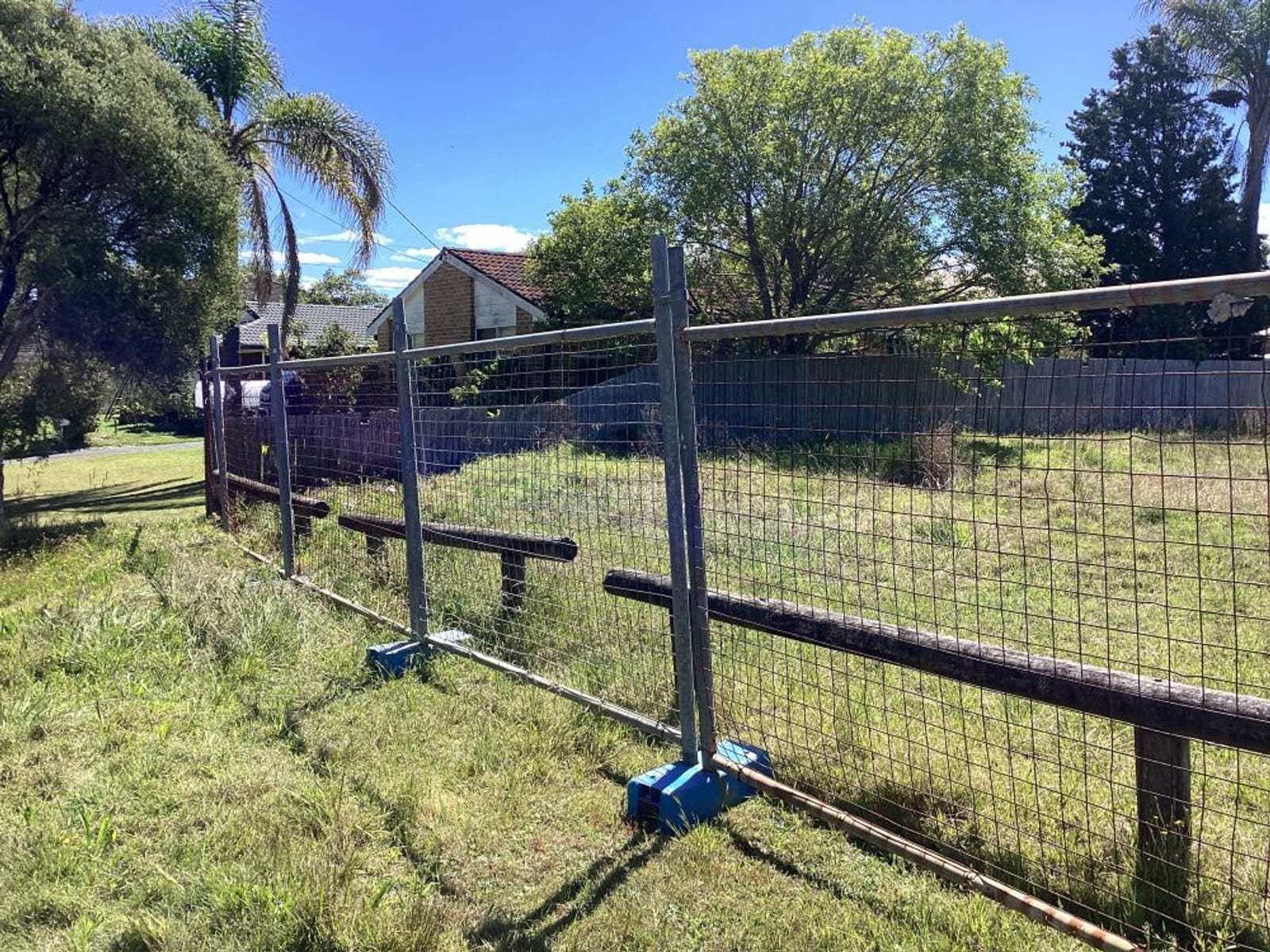
Standard temporary fence panels are 2.4 m wide and about 2.1 m high. Perimeter in metres divided by 2.4, rounded up, is your panel count. A 77 m frontage at Bateau Bay on the Central Coast came out at 33 panels.
3. Add a panel for each gate
A gate is a panel on a hinge, or a panel you unclamp and swing. Add one for a pedestrian gate and two where a truck needs to get in. Each one needs its own feet and clamps.
4. Feet and clamps come with it
One foot per panel plus a spare per run, and a clamp per join. The fleet counts these from your panel number, so you do not have to.
5. Bracing and shade cloth on street frontages
Where the fence runs along a street, add bracing and scrim (shade cloth). Councils ask for it, and wind on a long run of cloth will push unbraced panels over. Say so on the enquiry and it travels on the same truck.
6. Installation is included
The fencing crew delivers, stands the panels, clamps and braces them, and collects them when you call off-hire. Send the site plan or a satellite screenshot with the line marked and we count the panels for you.
What to send for a quote
- The address and the start date
- The length of the line, or a plan with it marked
- How many gates, and whether trucks use them
- Street frontage: yes or no (bracing and shade cloth)
- Whether you want a site toilet on the same delivery